The first half creates a world and enough intrigue to keep expectation alive. It is not consistently sharp, but the film still feels as though it is building toward something larger.
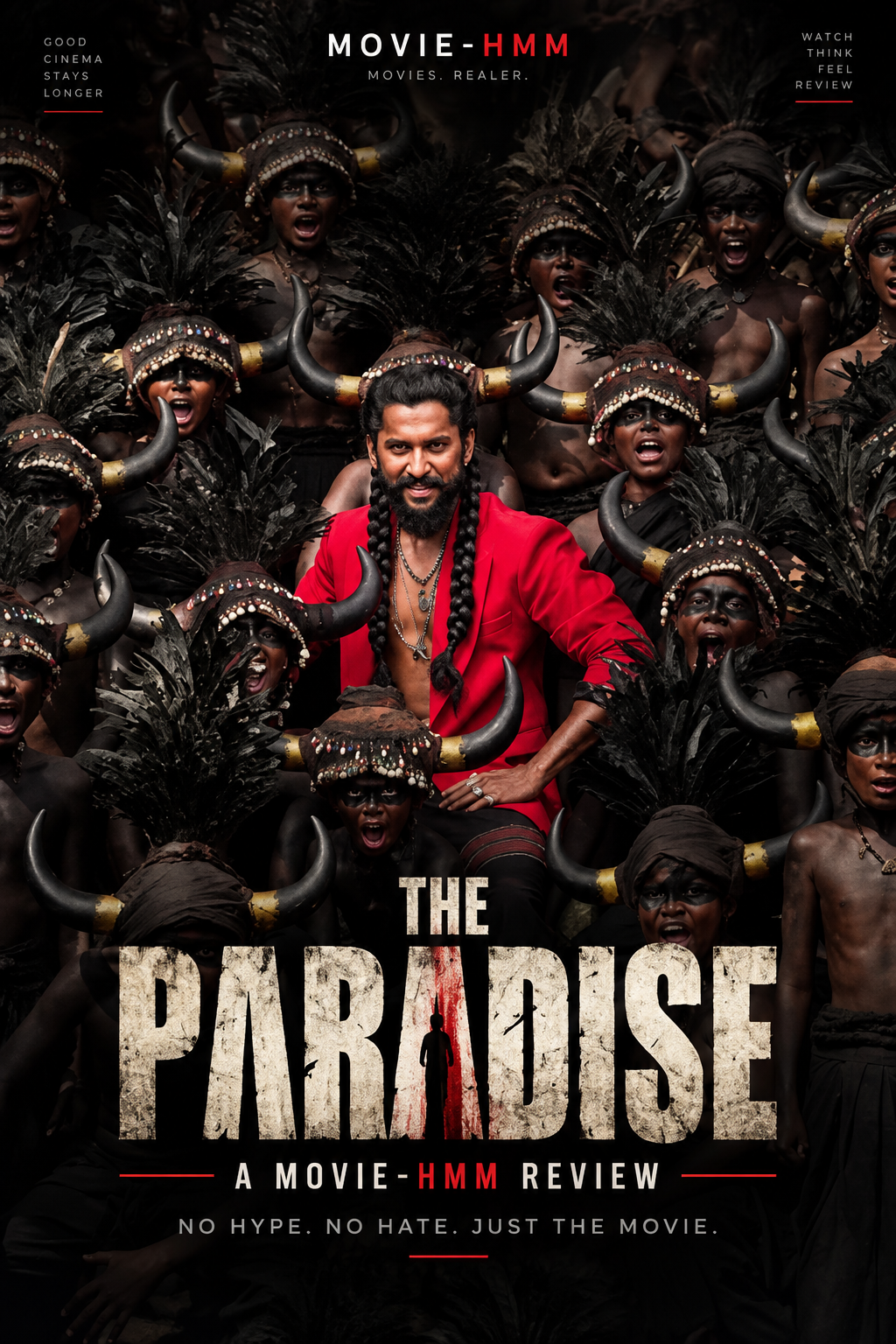
🎬 THE Movie....🤔hmm POSTMORTEMTelugu · AFTER RELEASE
The Paradise
🔴
FINAL DIAGNOSISAMBITION OUTRAN THE SCREENPLAY
The interval promised a movie the second half could not repay.
Who connected. Who didn't. Why.
The response split sharply. There was appreciation for Nani's commitment, scale, atmosphere and portions of the first half, but the larger conversation turned toward screenplay, pacing and the second-half payoff.
Where did the pulse change?
The interval is the film's strongest commercial promise. It raises the temperature and, more importantly, raises the audience's expectation of what the second half must now deliver.
This is where the film loses control. Escalation becomes louder without becoming dramatically stronger. The emotional and narrative payoff does not match the debt created at interval.
Nani's commitment, visual ambition, atmosphere, production scale, portions of the first half and a strong interval promise.
Second-half screenplay control, emotional payoff, pacing, sustained antagonist pressure and the conversion of thematic ambition into compelling drama.
Nobody escapes the table.
Nani's commitment is visible. Physical transformation and intensity are not the problem. The film needed the character's emotional journey to remain as convincing as the actor's effort.
The female characters needed greater dramatic agency inside the central conflict rather than functioning mainly around the hero's journey.
Threatening characters and opposing forces are introduced with potential, but the resistance facing the hero does not deepen enough as the film moves toward its climax.
Srikanth Odela's ambition is obvious. The lesson is not to become less ambitious; it is to make screenplay escalation lead visual escalation. Intensity cannot be created simply through louder staging.
This is the core diagnosis. The film contains ideas, world-building and emotional intention, but the connective screenplay tissue is not disciplined enough to convert those ingredients into sustained dramatic momentum.
The score adds force to several stretches, especially earlier portions, but background music can multiply existing emotion; it cannot manufacture emotional investment that the writing has not earned.
The songs contribute to the scale and identity, but every musical interruption has to justify its place when the central narrative already carries a demanding runtime.
The film needed a more ruthless sense of rhythm. Slow motion, repeated emotional emphasis and long transitions contribute to a feeling that individual moments are being protected at the expense of the complete film.
The visual world is one of the film's strengths. The images frequently communicate ambition and atmosphere. The lesson is to ensure the screenplay underneath deserves the scale placed on top of it.
The production ambition is visible. The lesson is not simply to spend less; it is to recognize that additional screenplay development can sometimes create more value than additional spectacle.
What should they learn?
Do not ask only whether the transformation looks powerful. Ask whether the audience understands the man deeply enough for the mass moment to feel inevitable.
Lock the emotional and narrative escalation before designing the elevation blocks.
Every major payoff needs deposits earlier in the screenplay. Emotion cannot suddenly be withdrawn at the climax if it was never deposited.
Score the emotion that exists. Do not ask music to replace missing dramatic construction.
Become the audience's advocate. A beautiful or expensive scene is still removable if the complete film becomes stronger without it.
Protect screenplay time with the same seriousness used to protect production scale.
A substantially tighter second half built around one clear emotional conflict, with stronger antagonist resistance and fewer competing elevation ideas, could have changed the film's fate.
THE FINAL POSTMORTEM
The Paradise had enough cinema to create a blockbuster trailer and enough ambition to create a blockbuster film. What it lacked was the screenplay discipline connecting one to the other.