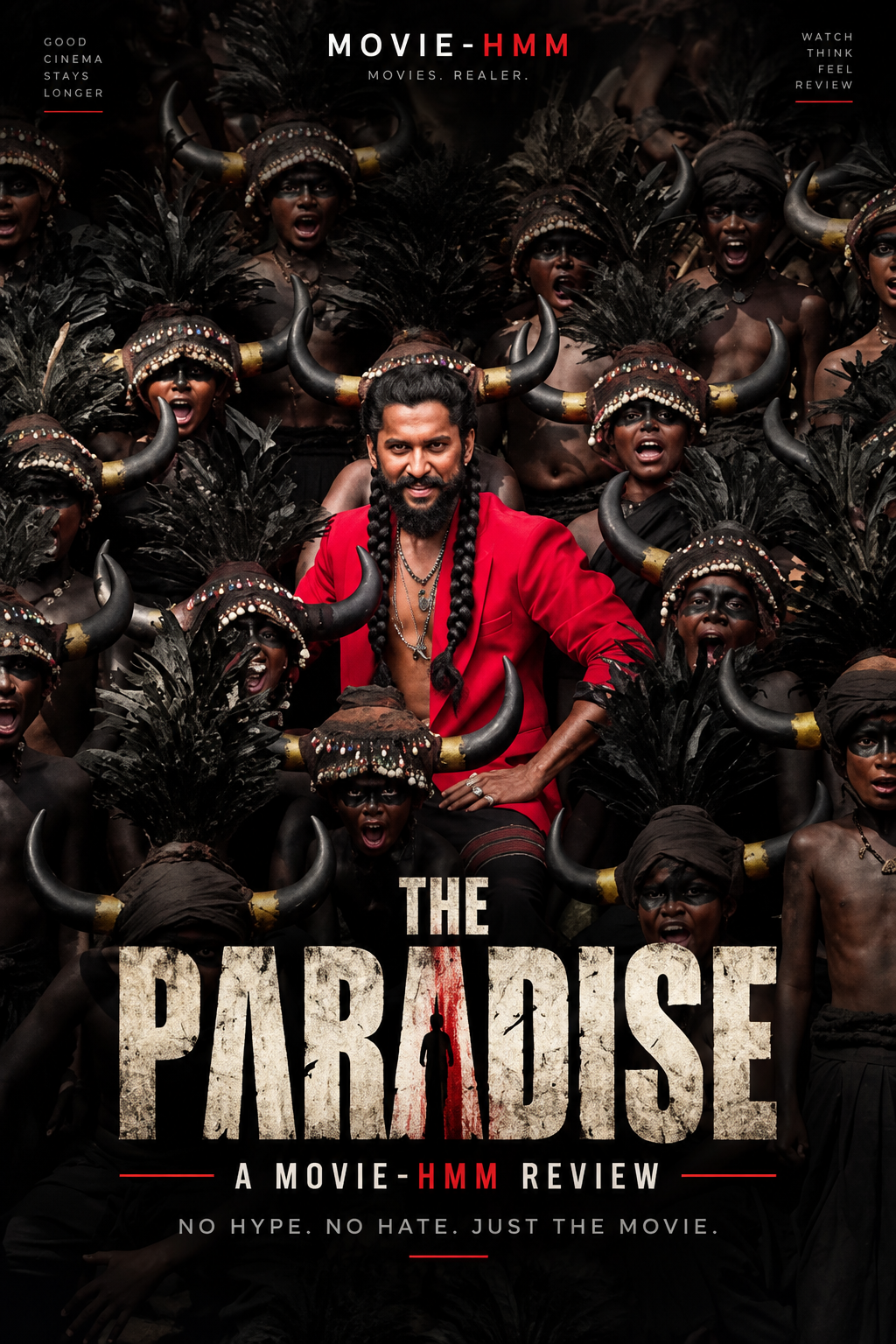
The Paradise
A fiercely worked-on film with striking atmosphere and commitment, but its emotional core gets buried under excess, brutality and a second half that loses direction.
The Paradise is not a lazy film. You can see the labour everywhere: in the scale, the production design, the dense crowd staging, Nani's physical commitment and the attempt to create a world with its own texture. The colour combinations and overall ambience are among the film's strongest qualities.
But the film often mistakes relentless brutality for emotional force. When Jadal erupts in anger, even using harsh language to express the depth of his pain, the emotion itself can feel genuine. The problem is what follows. Violence works in cinema when a killing, rescue or sacrifice leaves an emotional consequence. Here, the bloodshed becomes so frequent and graphic that individual deaths begin to lose meaning instead of gaining impact.
The production repeatedly returns to mud, grime and a deliberately rough visual environment to establish a rustic world. It is effective initially, but after a point the texture feels over-insisted upon. A world does not become more authentic simply because every frame is dirtier. The strongest visual moments are the ones where composition, colour and atmosphere do the storytelling.
Nani is fully committed and remains the film's anchor. Mohan Babu is especially effective in projecting the deeply cultivated feudal, Dora-like attitude that the story needs. His presence gives the power structure weight.
The second half is where the film begins to derail. The narrative becomes less focused, emotional connections weaken and the accumulated violence stops producing the intended high. Keerthy Suresh's special-number appearance also did not create the spark I expected; the issue for me is the staging and impact of the number rather than her appearance.
Srikanth Odela's ambition is visible, and the team clearly worked extremely hard on a huge, difficult production. That effort deserves recognition. But effort and scale cannot replace narrative control. The Paradise needed to trust its characters more, reduce the brutality, and allow important acts of violence or sacrifice to carry meaning.
My final feeling is mixed rather than dismissive. There is craft here, commitment, and images that stay with you. But the film keeps pushing when it should pause. A more disciplined second half and violence used for emotional consequence rather than accumulation could have turned this into a far stronger theatrical experience.
Nani's commitment, Mohan Babu's imposing feudal presence, production effort, colour palette, atmosphere and several visually striking compositions.
Excessive brutality, violence that loses emotional meaning, overused mud-and-grime imagery, an unfocused second half and a special song that lacks the expected impact.