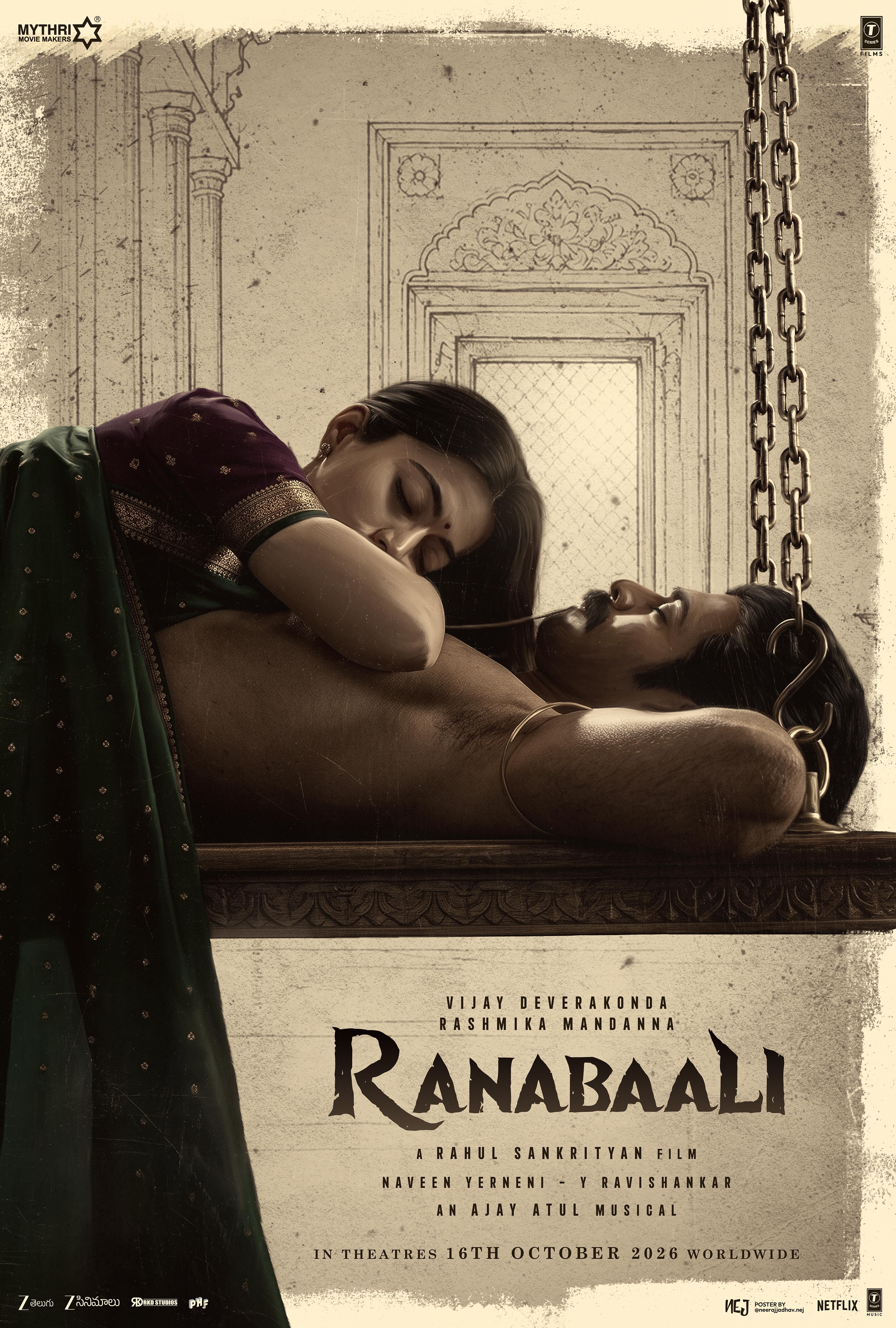
Ranabaali
A rare and ambitious famine drama with committed performances, Rashmika Mandanna's commanding emotional presence and impressive production values. Several episodes leave an impression, even as uneven pacing slows the journey.
RANABAALI — A GREAT FAMINE, A GRAND VISION, BUT AN UNEVEN JOURNEY. Annam Parabrahma Swaroopam. Food is divine, and when it disappears, survival becomes the greatest struggle. Ranabaali brings famine, displacement and resistance into the centre of an ambitious period drama. Its subject is unusual for a mainstream commercial film, and its seriousness is evident from the beginning.
VIJAY DEVERAKONDA — COMMITMENT WITHOUT EXCESS. Vijay's determination to deliver a substantial performance is visible throughout. His controlled expressions, physical commitment and composed presence suit a character living through desperation. Yet the screenplay does not always provide enough emotional variation to complement his restraint.
BOYA MALLANNA AND KARUVU RAKSHASUDU — THE WORLD OF HUNGER. The opening chapters establish an unforgiving environment where drought shapes every decision. Hunger becomes the story's most formidable enemy. The portrayal of Christianity through an antagonistic character or institution could have benefited from greater nuance; the film is strongest when its conflict centres on exploitation, dignity and survival.
JAYAMMA — RASHMIKA TAKES COMMAND. Rashmika Mandanna delivers one of the film's strongest performances. The sequence involving help offered to a bereaved household is particularly effective. Vijay performs well in this chapter, but Rashmika frequently becomes the emotional centre through her expressions, intensity and convincing portrayal of suffering.
UPADRAVAM — THE GREAT MIGRATION. The Gooty Camp and railway-line developments give the film historical scale and social weight. Entire communities are forced to search for survival. This is one of the more engaging episodes because the film concentrates on the human consequences of famine rather than relying only on heroic elevations.
PALEGADU — RESISTANCE AGAINST HUNGER. The attack on grain warehouses and the distribution of food to starving people provide one of the film's most satisfying developments. The conflict carries genuine moral urgency. However, repeated use of children to intensify the tragedy occasionally makes the emotional writing feel engineered.
RASHMIKA — AN EQUAL FORCE. The childbirth episode is particularly affecting. Against a backdrop of famine and displacement, the arrival of a child represents vulnerability, survival and hope. Rashmika brings remarkable conviction to these moments. She stands shoulder to shoulder with Vijay and occasionally dominates the emotional space.
KOBALI — A MYTHIC FINAL CHAPTER. The Potulayya conflict, Basra Mallanna Tata and Ranabaali's symbolic emergence create a spiritually charged climax. The ambition is evident, although the movement from grounded famine drama towards legendary heroism does not feel entirely seamless.
THE TECHNICAL CRAFT — CONVINCING AND ATMOSPHERIC. The drought-affected landscapes, settlements and period environments are effectively realised. The cinematography and production design give the film its visual identity. The music supports the serious dramatic tone, while the largely practical-looking imagery avoids excessive visual spectacle.
WHERE THE RHYTHM SLIPS. Jayamma's chapter, the Great Migration, the grain-warehouse attack and the childbirth sequence leave an impression. But the narrative repeatedly returns to suffering without consistently developing new dramatic stakes. The unrelenting seriousness and uneven pacing create noticeable lag between stronger episodes.
THE FINAL VERDICT — 7.0/10, OK TO WATCH. Ranabaali deserves appreciation for choosing a rarely explored subject and presenting it with impressive production values. Vijay brings sincerity, Rashmika supplies much of the emotional force, and several chapters are memorable. The screenplay's rhythm does not always match the scale of its ambition. Hmm... The famine leaves a lasting impression. The performances give it life. But the screenplay needed more nourishment.
Vijay's sincere performance; Rashmika's emotional strength; Jayamma and childbirth episodes; Great Migration; grain-warehouse raid; production design; cinematography; music.
Uneven pacing; repetitive suffering; occasional emotional manipulation; limited dramatic variation; and a tonal shift towards a mythic climax.
AI-generated review? Nope. I watch. I think. I judge. I rate. Technology just makes sure my English survives the journey from my head to your screen. The “hmm” is completely mine. 🤔
What did you think?
Your movie. Your reaction.