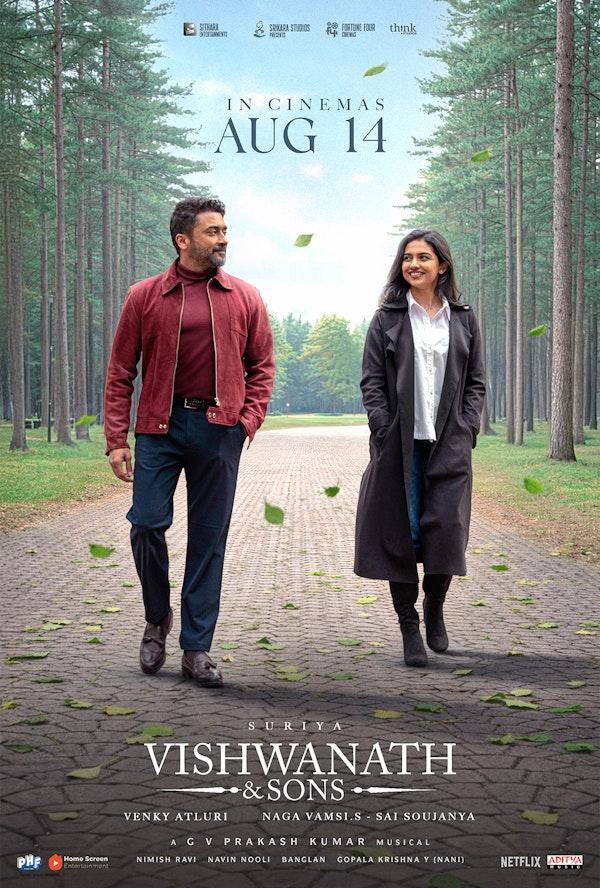
The early portions benefit from the contrast between Sanjay Vishwanath's disciplined personality and Maddy's spontaneous energy. Their interactions create curiosity without depending on exaggerated comedy. Suriya's restrained reactions and Mamitha's lively presence establish the emotional foundation. The family environment also introduces the tension between responsibility and personal happiness. The first half works because it trusts the actors to make ordinary conversations engaging.
🎬 THE Movie....🤔hmm POSTMORTEMTamil · Telugu · AFTER RELEASE
Vishwanath & Sons
🎬
FINAL DIAGNOSISTHE PERFORMANCES FOUND THE HEART. THE SCREENPLAY NEEDED MORE COURAGE.
Suriya and Mamitha Baiju give a mature relationship warmth and credibility. An examination of the creative decisions that made the film enjoyable and the missed opportunities that kept it from becoming exceptional.
Who connected. Who didn't. Why.
The film's appeal comes from Suriya's maturity, Mamitha Baiju's freshness and the emotional warmth of its family relationships. Audiences who enjoy character-driven romance may appreciate its sincerity. Viewers expecting deeper exploration of age, social judgment and unconventional relationships may find some dramatic developments familiar. The important distinction is that predictability does not erase the genuine appeal of the central performances.
Where did the pulse change?
The central relationship begins confronting the difference between personal affection and social acceptance. The dramatic transition is meaningful, but it could have placed the characters in a more difficult emotional position. A stronger interval would have forced both leads to make choices that could not easily be reversed.
The later portions rely more heavily on familiar family-drama mechanisms. Emotional confrontations and explanations occasionally repeat ideas already established through performances. The warmth remains, but the screenplay becomes less adventurous. The film could have explored the consequences of the relationship more deeply instead of moving towards reassuring resolutions. Nevertheless, the performers maintain enough emotional credibility to keep the experience enjoyable.
Suriya's restrained performance; Mamitha Baiju's freshness; the chemistry between the leads; warm family relationships; accessible direction; music; cinematography; and the central idea that personal happiness remains meaningful at every age.
Some predictable second-half developments; repeated emotional explanations; limited independent agency for the heroine; supporting characters who sometimes function mainly as obstacles; and insufficient exploration of the relationship's social and personal consequences.
Nobody escapes the table.
SURIYA — WHAT WORKED: His controlled performance is the film's greatest strength. Sanjay does not need constant heroic declarations. Suriya communicates uncertainty, affection and discomfort through pauses, small facial reactions and measured dialogue delivery. His maturity makes the character believable. WHAT COULD IMPROVE: The role could have demanded greater internal conflict. A man who has spent years fulfilling responsibilities should experience deeper contradictions when pursuing personal happiness. NEXT FILM: Continue choosing mature, emotionally complex characters, but seek screenplays that challenge the protagonist's beliefs rather than simply testing his patience.
MAMITHA BAIJU — WHAT WORKED: Mamitha brings energy, confidence and spontaneity. Her contrasting personality gives the relationship its charm. She can make a simple conversation entertaining without relying on exaggerated expressions. WHAT COULD IMPROVE: Maddy deserves stronger independent motivations. Her personality should not be defined mainly through the effect she has on Sanjay. The character's professional ambitions, fears and personal consequences could have received greater attention. NEXT FILM: Choose roles where youthful freshness is supported by agency, emotional contradictions and meaningful decisions.
THE REAL OPPOSITION — SOCIAL EXPECTATIONS: The film does not need a conventional villain. Its natural antagonist is the pressure created by age, family responsibility and public judgment. WHAT WORKED: These expectations provide a recognisable source of conflict. WHAT COULD IMPROVE: Opposition becomes less interesting when family members exist only to object and later agree. NEXT FILM: Give every opposing character a believable reason for their position. The strongest conflict comes when both sides have something meaningful to lose.
VENKY ATLURI — WHAT WORKED: Venky Atluri understands accessible emotional storytelling. He gives Suriya and Mamitha space to establish chemistry and presents the family environment with warmth. WHAT COULD IMPROVE: The direction sometimes chooses comfortable emotional resolutions over deeper examination of the relationship's consequences. Some scenes explain feelings already communicated through the actors. NEXT FILM: Trust audiences with difficult questions. Allow relationships to remain complicated when the characters have not genuinely resolved their differences. Emotional honesty can be more powerful than a perfectly reassuring conclusion.
STORY AND SCREENPLAY — WHAT WORKED: The film begins with a worthwhile idea: personal happiness does not end when somebody becomes older or carries family responsibilities. The contrasting personalities provide natural opportunities for romance and humour. WHAT COULD IMPROVE: The screenplay does not always explore the practical consequences of the relationship. Some second-half conflicts follow predictable patterns, and emotional explanations become repetitive. NEXT FILM: Build the drama around decisions that permanently change relationships. Give supporting characters their own motivations. Allow scenes to reveal emotions through behaviour rather than repeated dialogue. A promising premise deserves a screenplay equally willing to take risks.
GV PRAKASH KUMAR — WHAT WORKED: The music supports the romantic atmosphere and provides emotional warmth. The score helps maintain the film's accessible commercial identity. WHAT COULD IMPROVE: Music should not repeatedly tell the audience what the actors are already expressing. Some intimate conversations could benefit from silence. NEXT FILM: Create distinct musical identities for the leads. Their different generations, expectations and emotional rhythms offer opportunities for more adventurous themes and instrumentation.
SONGS AND LYRIC WRITING — WHAT WORKED: The central relationship offers meaningful themes of rediscovery, second chances, responsibility and emotional courage. These ideas suit reflective romantic songwriting. WHAT COULD IMPROVE: Generic romantic phrases can weaken a story built around an unusual relationship. The lyrics should reveal what makes this love different from a conventional youthful romance. NEXT FILM: Give each song a distinct point of view. One song could explore Sanjay's hesitation, another Maddy's confidence, and another the emotional cost of their choices. Individual lyricist credits should be confirmed against official film credits before attribution.
EDITING — WHAT WORKED: The film gives the performers room to establish natural chemistry and emotional warmth. WHAT COULD IMPROVE: Repeated family confrontations and explanatory dialogue reduce momentum in the later portions. NEXT FILM: End scenes once their emotional purpose has been communicated. Preserve meaningful silences, but remove dialogue that repeats information. A tighter second half would make the relationship feel more immediate and less dependent on melodrama.
NIMISH RAVI — WHAT WORKED: The cinematography gives the film a polished visual identity. The environments support the contrast between professional discipline and emotional uncertainty. WHAT COULD IMPROVE: The camera could communicate more of the relationship's changing power dynamics. NEXT FILM: Use framing, negative space, lighting and movement to reveal emotional distance. The visual language should change as the characters move from curiosity towards genuine commitment.
PRODUCTION AND CREATIVE INVESTMENT — WHAT WORKED: Backing a mature romantic family drama creates space for stories beyond routine hero-centric action. The casting and polished presentation provide commercial accessibility. WHAT COULD IMPROVE: Strong star chemistry should not become a substitute for screenplay development. Supporting characters, production design, sound and editing deserve equal creative attention. NEXT FILM: Invest in character workshops, script revisions and stronger supporting arcs before production begins. Encourage the creative team to explore difficult emotional consequences rather than resolving every conflict comfortably.
What should they learn?
Suriya should continue pursuing emotionally mature characters. The next challenge is selecting roles with greater psychological contradiction and more difficult personal decisions.
Venky Atluri should preserve his ability to create warmth while trusting audiences with unresolved complexity. Strong emotional drama does not always need a comfortable answer.
Give the relationship real consequences. Build supporting characters with independent motivations. Replace repeated explanations with decisions, behaviour and meaningful emotional reversals.
GV Prakash Kumar and the lyric-writing team should develop more character-specific musical themes. Use silence alongside music and allow lyrics to reveal distinct emotional perspectives.
Protect the natural performances, but shorten repetitive family confrontations. A leaner second half would strengthen the film's emotional rhythm.
Continue supporting mature, character-driven stories. Invest more heavily in screenplay workshops, supporting-character development and disciplined post-production rather than relying primarily on star chemistry.
Give Maddy an equally substantial independent emotional journey, then allow both leads to make a difficult decision with genuine consequences. That single change could transform a pleasant romance into a more memorable drama.
THE FINAL POSTMORTEM
Vishwanath & Sons succeeds because Suriya and Mamitha make its central relationship engaging. The film has warmth, maturity and an accessible emotional identity. Its limitation is not the unconventional premise. It is the screenplay's reluctance to explore every consequence of that premise. THE LESSON: Keep the warmth. Give the writing greater courage. The actors have already shown that the audience can connect with this world.