The film establishes Trinadh's weaknesses, his family relationships and the emotional foundation for change. Ravi Teja's restrained moments create a stronger connection than routine mass-hero presentation.
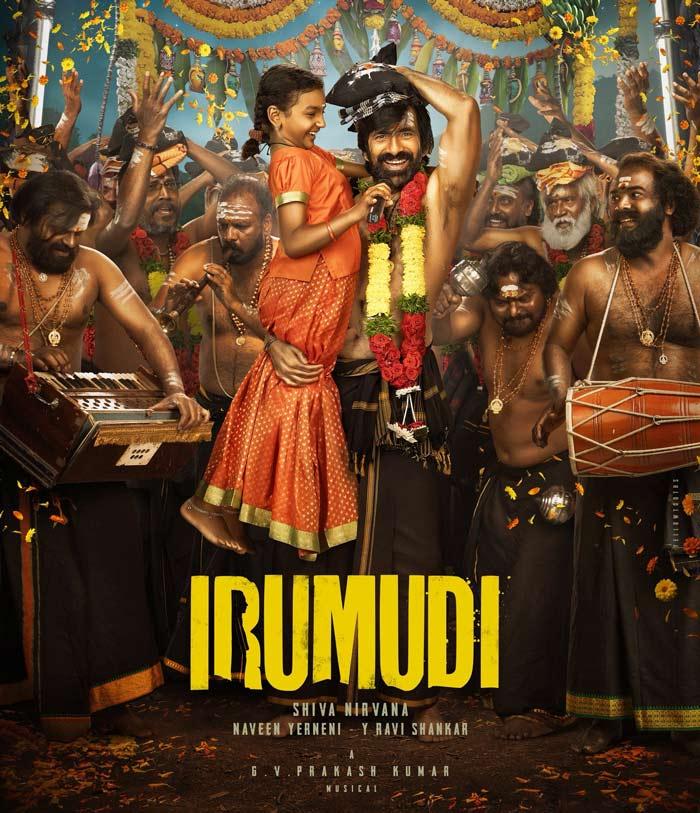
🎬 THE Movie....🤔hmm POSTMORTEMTelugu · AFTER RELEASE
Irumudi
🎬
FINAL DIAGNOSISTHE EMOTION WON. THE FORMULA STILL HAS LESSONS TO LEARN.
Ravi Teja finds a stronger emotional identity through fatherhood and Ayyappa devotion. A constructive filmmaking autopsy of what worked and what deserves improvement.
Who connected. Who didn't. Why.
A rewarding emotional family entertainer. The father-daughter bond and devotional journey connect strongly, while familiar commercial elements remain the main reservation.
Where did the pulse change?
The central emotional stakes become clearer. The screenplay's challenge is to make the transition towards the larger conflict feel earned rather than merely dramatic.
Fatherhood and Ayyappa devotion give the later portions emotional purpose. Some familiar commercial turns could be tighter, but the central relationship remains the film's strongest element.
Ravi Teja's emotional restraint; Baby Nakshathra; the father-daughter relationship; Ayyappa Deeksha; devotional atmosphere; family emotions; and the screenplay's human foundation.
Some familiar commercial developments, predictable action beats, limited independent choices for supporting characters and occasional emotional over-explanation.
Nobody escapes the table.
WHAT WORKED: Ravi Teja demonstrates that his screen presence does not depend entirely on energy, dialogue or physical action. His emotional scenes with his daughter are effective because he allows the character to appear uncertain, frightened and vulnerable. The quieter performance gives Trinadh credibility. WHAT COULD IMPROVE: Some transitions between the emotional father and the commercial action hero could be more gradual. Greater variation in facial reactions and moments of silence would make the transformation even more convincing. NEXT FILM: Continue choosing characters with emotional complexity. The audience already knows Ravi Teja can generate energy. The more interesting challenge is showing what happens when that energy is replaced by fear, regret, affection or restraint.
WHAT WORKED: Priya Bhavani Shankar contributes warmth and stability to the family setting. Kaveri helps establish that Trinadh's transformation affects the entire household, not only his relationship with his daughter. WHAT COULD IMPROVE: The character needs more independent decisions. A wife and mother should not exist only to support the hero's emotional journey. Her fears, disagreements and choices could have shaped the story more directly. NEXT FILM: Seek roles where the heroine influences the central conflict through action and personal conviction rather than functioning mainly as the family's emotional support.
WHAT WORKED: The supporting characters introduce different perspectives on parenting, responsibility and personal change. Their presence gives the family drama a wider emotional context. WHAT COULD IMPROVE: Supporting roles should contribute decisions that materially affect the outcome rather than mainly offering advice or opposition. NEXT FILM: Give every major supporting character a distinct motivation and a meaningful consequence for their actions.
WHAT WORKED: Shiva Nirvana understands that a family relationship can create greater emotional impact than an exaggerated action sequence. He gives Ravi Teja space to communicate vulnerability and allows the father-daughter relationship to become the film's emotional centre. The devotional setting also gives the story a distinctive identity. WHAT COULD IMPROVE: Certain commercial developments remain predictable. Some conflicts could emerge more naturally from character decisions instead of following familiar dramatic patterns. NEXT FILM: Preserve the sincerity, but demand stronger cause and effect from the screenplay. Every major emotional payoff should be earned through earlier choices.
The strongest decision behind Irumudi is to build the story around a father's relationship with his daughter rather than around another conventional mass-hero conflict. Trinadh is not presented simply as a powerful man. He has weaknesses, responsibilities and reasons to change. The Ayyappa Deeksha gives his transformation a spiritual dimension. Fatherhood provides the emotion; devotion provides the discipline. This combination makes the film's central journey relatable and rewarding.\n\nWHAT WORKED: The screenplay connects fatherhood, personal weakness and spiritual discipline. Trinadh's need to change is emotionally understandable. The story also raises a worthwhile question: does protecting a child mean controlling every danger, or helping that child become stronger? WHAT COULD IMPROVE: Some dramatic developments follow familiar commercial patterns. The story occasionally moves from emotion into action without enough intermediate character development. NEXT FILM: Build the plot around irreversible choices. Make each action sequence change the protagonist's understanding of himself rather than simply demonstrate his strength.
WHAT WORKED: The music supports the film's devotional atmosphere and gives the spiritual journey a recognisable emotional identity. The strongest musical moments are those that connect faith with Trinadh's internal change. WHAT COULD IMPROVE: Background music should not constantly instruct the audience to feel sadness, fear or devotion. NEXT FILM: Use greater contrast between music and silence. A father's hesitation or a child's quiet reaction can sometimes be more powerful without orchestral emphasis. Individual music credits should be confirmed against the film's official credits.
WHAT WORKED: Ayyappa Deeksha provides meaningful material for songs about self-control, surrender, responsibility and transformation. Lyrics can connect the external pilgrimage with the protagonist's personal journey. WHAT COULD IMPROVE: Devotional language becomes less effective when it relies only on familiar phrases and repeated declarations of faith. NEXT FILM: Write each song from a particular stage of the character's emotional development. The words should reveal what has changed inside him since the previous scene. Individual lyricists should be named only after verifying the official credits.
WHAT WORKED: The emotional sequences benefit from allowing performers enough time to communicate their feelings. WHAT COULD IMPROVE: Familiar action beats and repeated explanations can slow the overall narrative. NEXT FILM: Protect the father-daughter scenes, but trim moments that repeat information already understood. Editing should preserve emotional depth without confusing length with importance.
WHAT WORKED: The contrast between domestic life and the devotional environment supports the film's central transformation. The spiritual setting provides opportunities for distinctive visual storytelling. WHAT COULD IMPROVE: Attractive images alone do not communicate spiritual development. NEXT FILM: Use framing, lighting, camera distance and movement to reveal how Trinadh changes. Early scenes could visually isolate him, while later compositions could communicate greater connection with his family and surroundings.
WHAT WORKED: The family setting and devotional imagery help establish the cultural identity of the story. WHAT COULD IMPROVE: The environments should reflect the character's personal transformation rather than remaining visually static. NEXT FILM: Use objects, domestic spaces and religious details to reveal personality, history and changing relationships.\n\nWHAT WORKED: The visual distinction between ordinary family life and the discipline associated with Ayyappa Deeksha supports the narrative. WHAT COULD IMPROVE: The physical signs of the protagonist's transformation could be developed more consistently. NEXT FILM: Let costumes, grooming and small physical details communicate the passage of time and internal change.\n\nWHAT WORKED: The action provides the commercial energy expected from a Ravi Teja film. WHAT COULD IMPROVE: The emotional consequences of violence deserve more attention than the spectacle alone. NEXT FILM: Design action around character choices, physical limitations and the responsibilities of fatherhood. A fight should change the story, not merely interrupt it.\n\nWHAT WORKED: Supporting a family-oriented commercial film with a devotional dimension creates space for emotionally grounded mainstream entertainment. WHAT COULD IMPROVE: Greater investment in script development and supporting characters would strengthen the film without necessarily increasing its budget. NEXT FILM: Prioritise writing workshops, character development and disciplined editing. The emotional foundation is already strong; the commercial structure should become equally thoughtful.
What should they learn?
Continue choosing emotionally complex characters. Trust facial expressions, vulnerability and silence rather than depending on familiar heroic reactions.
Preserve the sincerity of the family relationships. Develop stronger cause and effect so that commercial moments emerge naturally from the characters.
Build dramatic turns around irreversible choices. Give the heroine and supporting cast stronger agency. Let each action scene change the emotional story.
Use devotional music to express specific stages of transformation. Allow silence in intimate scenes and make lyrics reflect the character's inner journey.
Protect emotional scenes but trim repetitive commercial sequences and explanations.
Invest in script development, supporting-character arcs, sound design and disciplined editing. Keep the emotional foundation at the centre.
Make every commercial action sequence directly change the father-daughter relationship or Trinadh's spiritual transformation.
THE FINAL POSTMORTEM
Irumudi works because its emotional foundation is believable. Ravi Teja's performance, Baby Nakshathra's presence, the father-daughter relationship and the devotional journey give the film genuine appeal. The weaknesses are not reasons to abandon the formula, but opportunities to improve it. The next step for everyone involved is to make every commercial scene as meaningful as the relationship at the centre. THE LESSON: When the emotion is strong, the spectacle should serve it.